

Is it better to mop with hot water or cold water?
Is It Better to Mop With Hot Water or Cold Water?
For most everyday floor cleaning, lukewarm or warm water is the safer all-round choice—not very hot water and not ice-cold water. When using a Mop And Bucket, the floor material and the cleaning-product label matter more than simply making the water as hot as possible.
Hot water can help loosen oily or sticky grime, but excessive heat can be unsuitable for some timber, laminate, vinyl, sealed or heat-sensitive floors. Cold water can also clean effectively when the detergent is designed for it. For disinfectants, always follow the stated dilution and contact-time directions rather than assuming hot mop water will kill germs.
Hot or Cold Water With a Mop And Bucket: The Quick Verdict
Warm water
Best general starting point. Useful for ordinary soil, food marks and many routine cleaning jobs when the floor and chemical instructions allow it.
Cold water
Often perfectly usable. Some detergents work well in cool or room-temperature water, and cooler water can be a cautious option for temperature-sensitive flooring.
Very hot water
Not automatically better. Extra heat may help soften greasy residue, but it can be unnecessary and may not suit every surface or cleaning chemical.
If you remember only one rule, make it this: read the floor-care instructions and cleaner label first. Water temperature is only one part of effective floor mopping. The right detergent, correct dilution, clean mop head, good wringing and regular water changes can matter just as much.
What Temperature Water Should You Mop Floors With?
There is no single ideal mop water temperature for every floor. In many routine situations, comfortably warm or lukewarm water is a practical middle ground.
The aim is not to fill the mop bucket with the hottest water available. Your aim is to loosen dirt without damaging the floor, interfering with the cleaning chemical or leaving too much moisture behind.
Interactive: Choose Your Floor Type
Select your floor for a quick starting recommendation.
Is It Better to Mop With Hot Water or Cold Water for Tile, Timber and Other Floors?
| Floor type | Practical starting point | Main concern |
|---|---|---|
| Ceramic and porcelain tile | Warm water with a suitable cleaner is commonly practical. | Check grout, coatings and cleaner compatibility. |
| Timber / hardwood | Use minimal moisture and follow the floor maker's instructions. | Too much water and excessive heat can be risky for wood and finishes. |
| Laminate | Use a lightly damp mop and a compatible cleaner. | Standing water can reach seams and edges. |
| Vinyl | Usually mild or lukewarm cleaning conditions are sensible. | Avoid methods the manufacturer warns may affect finishes or adhesive. |
| Natural stone | Use a stone-safe cleaner and suitable water temperature. | Acids and unsuitable cleaners can be a bigger problem than water temperature. |
| Sealed concrete | Warm water may help routine soil removal if the coating permits it. | Protect the seal or coating. |
What about mopping tile floors?
For many ceramic and porcelain tile floors, warm water can help with normal dirt and kitchen residue. That does not mean boiling or extremely hot water is needed.
If the floor has grout, a coating, natural-stone inserts or a special finish, check the care instructions first. The cleaning chemical itself may also state a required dilution temperature.
Hot or cold water to mop wood floors?
Timber needs more caution. The bigger issue is often moisture control. A mop should generally be well wrung so the surface becomes damp rather than flooded.
With timber and engineered timber, avoid assuming hotter means cleaner. Follow the flooring manufacturer's care directions and use a compatible product.
Does Mopping With Hot Water Kill Germs?
You should not rely on ordinary hot tap water in a mop bucket as your disinfecting method.
Cleaning and disinfecting are different jobs. Cleaning removes dirt, grease and a large amount of contamination through detergent, water and physical action. Disinfection uses a suitable disinfecting product under defined conditions.
If a floor actually requires disinfection, use a product that is suitable for that surface and follow its instructions for dilution, application and contact time.
Does Hot Water Clean Floors Better When There Is Grease?
Warm water can be useful when cleaning oily or sticky residue because heat may help soften some greasy soils. But the cleaning product still does much of the work.
In a busy Sydney kitchen, lunchroom or food-service environment, a greasy floor may need a suitable degreasing product rather than simply hotter mop water.
A common mistake is repeatedly adding more floor cleaner to already dirty mop water. That can leave a film behind. If your floor feels sticky after mopping, possible causes include excessive chemical, contaminated mop water, insufficient rinsing or an unsuitable cleaning product.
Why are my floors sticky after mopping?
- Too much cleaning chemical was used.
- The mop water became dirty and was not replaced.
- The mop head transferred old residue back onto the floor.
- The product was unsuitable for the surface.
- The floor needed a clean-water rinse.
- Grease required a different cleaning method.
What About Mopping With Hot Water and Vinegar?
Vinegar should not be treated as a universal floor cleaner.
Its acidity may make it unsuitable for some natural stone, finishes, sealers and other surfaces. Before using vinegar on flooring, check the flooring manufacturer's guidance.
The safest approach is usually to use a cleaner designed for the floor rather than a homemade mixture whose concentration and surface compatibility are uncertain.
Never mix vinegar with bleach-containing products.
Are There Real Benefits of Mopping With Ice Water?
Ice-water mopping has received attention online, but there is no good reason to treat ice-cold water as a universal floor-cleaning upgrade.
A cleaner does not become more effective merely because ice is added to the mop bucket. Cleaning performance depends on the combination of soil type, detergent chemistry, contact, agitation, water, mop condition and floor material.
For ordinary everyday floor cleaning, use the temperature recommended by the cleaning-product and flooring instructions rather than following a viral cleaning hack.
How to Mop Floors Properly
Water temperature matters, but technique often separates a clean floor from one that dries streaky or sticky.
- Remove dry debris first. Vacuum or sweep loose dust, grit, hair and crumbs.
- Check the floor-care instructions. Confirm which cleaners and moisture levels are safe.
- Prepare fresh mop water. Follow the cleaner's stated dilution directions.
- Use a clean mop head. Starting with an already dirty mop spreads contamination.
- Wring properly. The floor normally should not be flooded.
- Work in manageable sections. Move from the cleaner area toward the dirtier area.
- Change dirty mop water. Do not keep mopping with water that has become visibly contaminated.
- Allow the floor to dry. Keep people away from wet areas where practical.
- Clean the equipment afterwards. Rinse the bucket and clean or launder the mop head as appropriate.
For supplies used in routine floor cleaning, browse KCLEAN's floor care range.
Does the Mop And Bucket You Use Matter?
Yes. A good floor mop and bucket setup makes moisture control easier.
For larger areas, a Mop Wringer Bucket can help remove excess water from a mop head. That is useful in commercial floor cleaning where oversaturating the floor can slow drying and create unnecessary wetness.
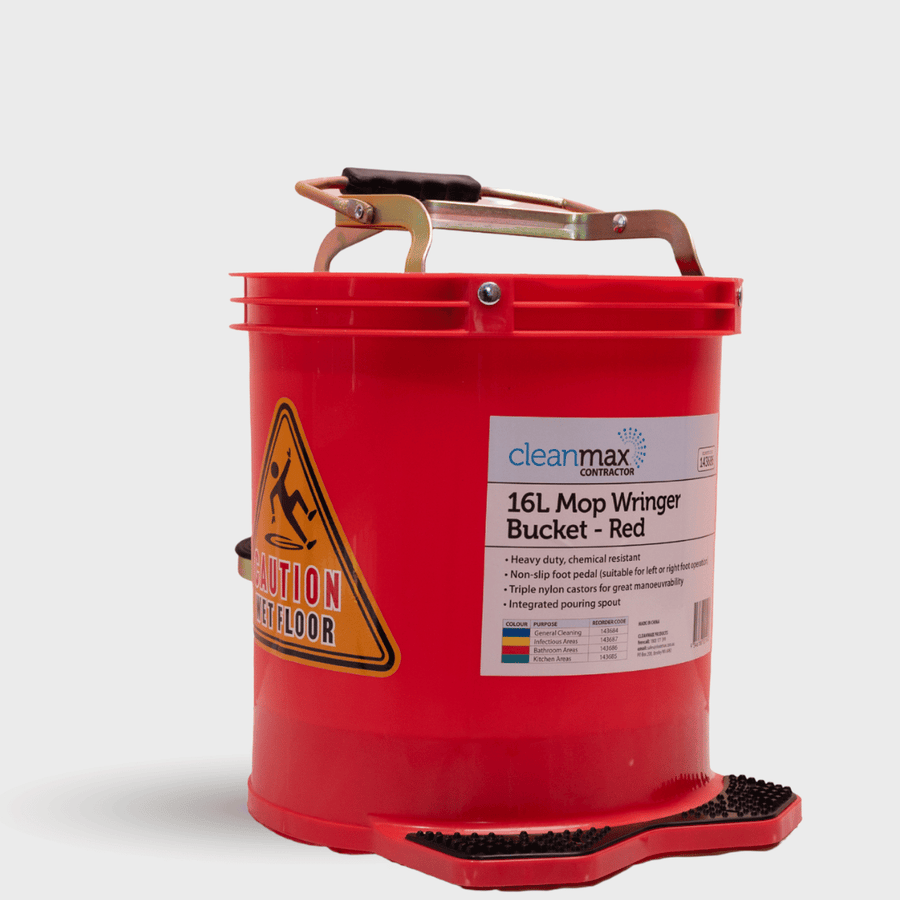
Heavy-Duty Mop Wringer Bucket
KCLEAN lists a 16L mop wringer bucket designed for residential and commercial use. Its wringer helps remove excess water, while castor wheels make movement across larger floor areas easier.
If you are comparing a Spin Mop And Bucket, Flat Mop And Bucket, traditional mop wringer bucket or industrial mop and bucket, focus on the job rather than the trend.
A spin mop and bucket may suit quick domestic cleaning. A wringer bucket can make more sense where a larger mop head is being used repeatedly across bigger spaces.
Browse the full Mop Buckets collection to compare the available options.
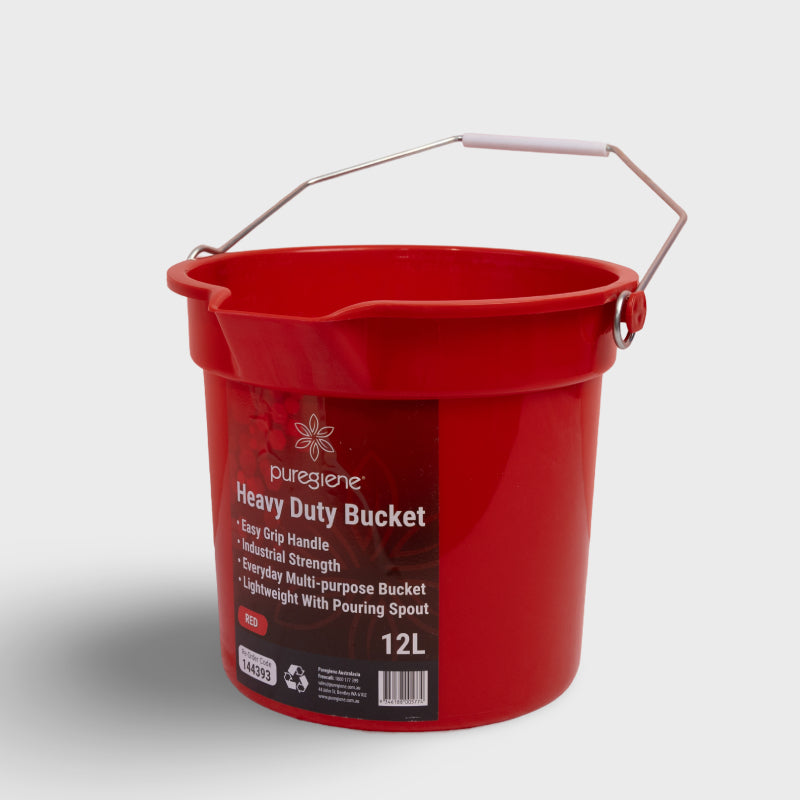
Puregiene® Round Bucket Heavy Duty Red 12L Each
For jobs that do not need a wringer system, KCLEAN also lists the Puregiene Round Bucket Heavy Duty in red.
Hot vs Cold Water for Commercial Floor Cleaning in Sydney
Commercial floor cleaning has another challenge: the same building may contain several different floor types.
A Sydney office might have tile in bathrooms, vinyl in a kitchen area, carpet around workstations and a sealed entrance floor. A warehouse or commercial property may also have coated concrete or high-traffic areas where soil builds up differently.
That is why professional mopping methods should be based on the floor, chemical and contamination level—not one water-temperature rule for the whole building.
Colour-coded buckets can also be useful
In commercial environments, colour-coded cleaning equipment can help separate equipment used for different areas. KCLEAN's wringer bucket is offered in multiple colour options, making it suitable for businesses that use a colour-coded cleaning system.
You can explore KCLEAN's wider cleaning supplies collections for floor care, mop equipment and other commercial cleaning products.
How Can KCLEAN Services Help With Mop And Bucket Floor Cleaning?
KCLEAN Services supplies cleaning products and equipment for homes and commercial facilities and can help customers choose a mop bucket, floor-care product or cleaning setup suited to the job.
If you are unsure whether you need a traditional mop and bucket set, an industrial mop and bucket, a mop wringer bucket or a different floor-cleaning product, the useful questions are:
- What type of floor are you cleaning?
- How large is the area?
- Is the soil mainly dust, food residue, grease or general foot traffic?
- Does the site need colour-coded cleaning equipment?
- How much moisture can the floor safely tolerate?
- Does the cleaning chemical require a particular dilution method?
Need help choosing the right floor-cleaning setup?
Contact KCLEAN Services for current product advice and availability.
Address: 9/340 Hoxton Park Road, Prestons NSW 2170, Australia
Phone: 0421 869 076
For current options, browse KCLEAN Mop Buckets.
What Is the Best Mop And Bucket?
There is no single best mop and bucket for every user.
The best option is the one that matches your floor area, mop style, moisture-control needs and cleaning frequency.
| Cleaning situation | Useful option to consider |
|---|---|
| Small home floor area | Compact floor mop and bucket or flat mop system |
| Frequent household cleaning | Spin mop and bucket or easy-wring system |
| Office or commercial site | Mop wringer bucket with suitable mop head |
| Larger floor area | Mobile wringer bucket or commercial system |
| Multiple hygiene zones | Colour-coded mop and buckets |
Before buying based only on a search for "best mop and buckets" or "mop and buckets sale", think about how the equipment will actually be used. Capacity, wringing, mobility, durability and ease of cleaning are more useful criteria than a fashionable feature.
What About a Steam Mop?
A steam mop is different from ordinary wet mopping. It applies heated steam rather than simply using hot mop water.
That difference matters because not every floor is suitable for steam. Before using a steam mop on timber, laminate, vinyl or any sealed floor, check whether the floor manufacturer permits it.
Do not assume a steam mop is automatically safer or more effective simply because it runs hotter.
A Practical Sydney Cleaning Scenario
Consider a tiled staff kitchen after a busy workday. There are shoe marks, drink spills and a small greasy area near the food-preparation space.
Filling the bucket with extremely hot water is not the first step. A better process is to remove dry debris, identify an appropriate floor cleaner, dilute it according to its instructions, use suitable water, mop the cleaner areas first and deal with the greasy section with the correct cleaning chemistry.
If the mop water becomes visibly dirty halfway through the room, replace it. Continuing with dirty mop water can simply move soil around the floor.
This example explains why the answer to "hot or cold?" cannot be separated from mop hygiene, cleaner dilution and the condition of the water.
Frequently Asked Questions
Should I mop with hot or cold water?
Lukewarm or warm water is a practical starting point for many routine floor-cleaning jobs, but the floor and cleaning-product instructions should decide the final method.
Is hot water better for mopping?
Not always. Warm water can help with some oily or sticky soils, but very hot water is not needed for every job and may be unsuitable for certain flooring or cleaning products.
Can I mop floors with cold water?
Yes. Many cleaning products can work in cool or room-temperature water. Check the cleaner label and floor-care instructions.
Should mop water be warm?
Warm or lukewarm water is often a sensible general choice when no other instruction is given, but it should not override manufacturer guidance.
Does hot water kill germs when mopping?
Do not depend on ordinary hot mop water as a disinfectant. Where disinfection is required, use a suitable disinfecting product exactly as directed.
Should I use hot water with floor cleaner?
Only if the product instructions permit it. Some chemicals specify room-temperature or another water condition for correct dilution.
What water should I use for laminate floors?
Follow the laminate manufacturer's care instructions and avoid excess water. A lightly damp mop is generally more important than trying to maximise water temperature.
Can I use hot water on timber floors?
Do not assume hot water is suitable. Timber floors can be sensitive to moisture and finishes vary, so follow the flooring manufacturer's cleaning guidance.
Why are my floors sticky after mopping?
Common reasons include too much detergent, dirty mop water, cleaner residue, an unsuitable product or grease that was not fully removed.
Final Verdict: Hot Water or Cold Water?
For most people, lukewarm or warm water is the best default for mopping—but there is no universal temperature that is right for every floor.
Very hot water is not automatically more hygienic or more effective. Cold water is not automatically wrong either. The best water temperature for mopping depends on the floor surface, soil, cleaning product and instructions.
For tile and greasy areas, warm water may be useful. For timber, laminate and other moisture-sensitive surfaces, use extra care. If disinfecting is required, rely on the correct disinfectant procedure rather than simply turning up the water temperature.
Most importantly, use clean mop water, the correct chemical dilution, a clean mop head and a good wringing technique.