

Which Bathroom Cleaner Is Recommended for Sensitive Surfaces?
Which Bathroom Cleaner Is Recommended for Sensitive Surfaces?
The best bathroom cleaner for sensitive surfaces is a mild, non-abrasive cleaner whose current label specifically approves the material you are cleaning. For stone, chrome, acrylic, coated glass and specialist finishes, avoid choosing a product simply because it says “heavy duty”; surface compatibility matters more than cleaning strength.
Bathrooms look simple until you list what is actually inside them. One room may contain ceramic tile, natural stone, chrome taps, stainless fittings, acrylic, glass, painted cabinetry, silicone, grout and coated surfaces. Treating every material with the same chemical is where avoidable damage begins.
For Sydney homes, offices, strata properties and commercial washrooms, the better question is not “What is the strongest bathroom cleaner?” It is: “What is the safest cleaner that can remove this soil from this particular surface?”
That is also the approach used throughout KCLEAN Services' current professional cleaning guidance: identify the surface, identify the problem and then select the product.
What Is a Sensitive Bathroom Surface?
A sensitive surface is simply a material that can be scratched, etched, discoloured, dulled or damaged by the wrong cleaner or cleaning tool.
Natural stone
Marble and some other natural stones need special care. Acidic scale-removing chemistry can react with acid-sensitive stone, so a normal shower descaler should never be assumed safe.
Chrome and specialty metal finishes
Taps, handles and shower fittings may have decorative coatings. Aggressive chemistry or rough scouring pads can affect their appearance.
Acrylic and plastics
Acrylic shower components can scratch or haze more easily than hard ceramic tile. This is where a gentle bathroom cleaner and soft cloth make sense.
Coated or treated glass
Shower glass may have a protective treatment. A cleaner that is fine on plain glass may not suit every coating, so check the glass-care instructions too.
Which Bathroom Cleaner for Sensitive Surfaces Should You Choose?
For routine dirt, fingerprints, light body oils and fresh water marks, the safest starting point is generally a gentle bathroom cleaner or mild multipurpose cleaner that specifically lists your surface as compatible.
For a bathroom cleaner for delicate surfaces, look for four things before buying:
- Clear instructions showing where the cleaner can be used.
- No need for abrasive powder or aggressive scrubbing.
- Directions that explain dilution, rinsing and contact time.
- Safety information that is easy to find and understand.
Do not automatically jump to the strongest chemical when an ordinary mark will come off with mild chemistry and a microfibre cloth. Stronger products are best saved for jobs that actually require them.
Which Cleaner Fits Your Bathroom Surface?
Interactive surface selector
Select the surface you want to clean:
Product Overview: What Kind of Professional Surface Cleaner Makes Sense?
KCLEAN Services' live 2026 range includes dedicated bathroom products as well as multipurpose and professional cleaning products. The key is that these products do different jobs rather than acting as one universal chemical.
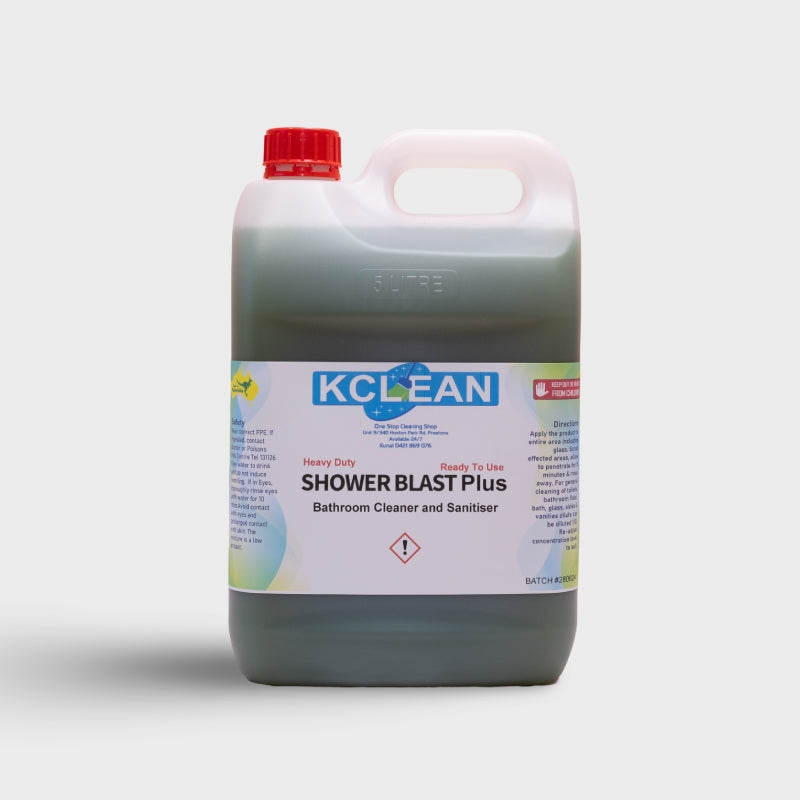
For regular bathroom maintenance, a routine washroom cleaner can make more sense than a specialist scale chemical. For cloudy shower screens with actual scale and soap build-up, a dedicated shower product may be more efficient.
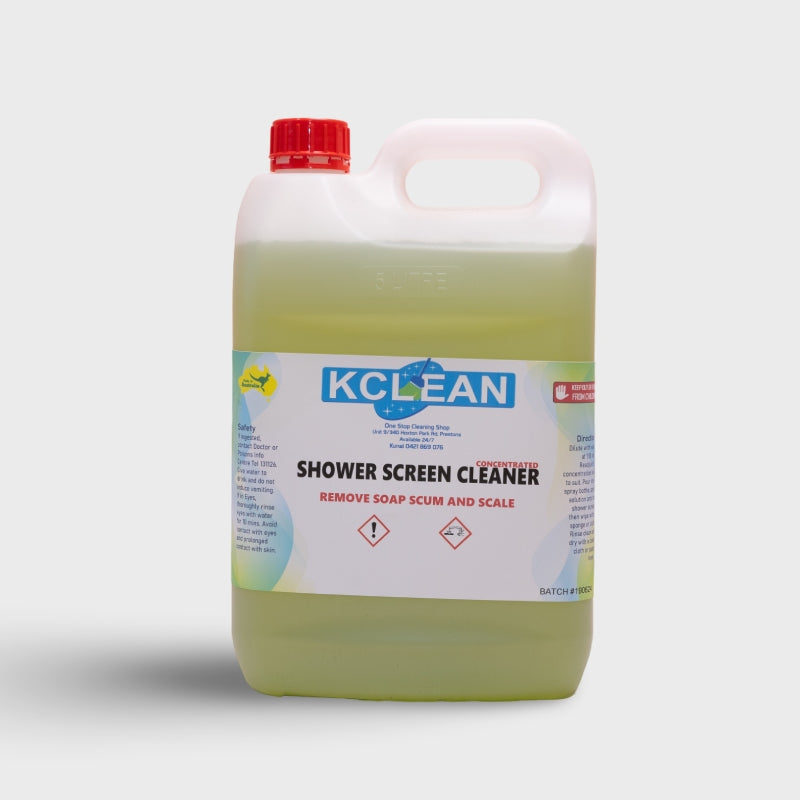
What is included?
This is not really an “unboxing” category. Commercial cleaning products used by professionals are normally supplied as individual chemicals or cleaning-system components. For a sensitive-surface bathroom kit, the practical setup is:
- a compatible daily surface cleaner;
- clean microfibre cloths;
- a non-scratch applicator where suitable;
- separate toilet-cleaning tools;
- and a specialist cleaner only when the surface and soil require it.
Who is this approach for?
It suits Sydney households, professional cleaners, offices, strata managers, facility teams and anyone managing a bathroom containing more than basic ceramic surfaces.
How Should a Safe Cleaner for Bathroom Surfaces Perform?
A cleaner does not deserve a high score merely because it removes dirt fast. For delicate materials, performance has two sides: cleaning effectiveness and surface preservation.
| Performance factor | What good looks like | Warning sign |
|---|---|---|
| Soil removal | Removes the intended residue without excessive scrubbing. | You need repeated aggressive abrasion. |
| Surface compatibility | The label clearly approves the material. | The product makes only vague “all surfaces” claims. |
| Finish | No visible dulling, scratching or unwanted residue. | Hazing, etching or loss of shine appears. |
| Ease of use | Simple dilution and application instructions. | You are guessing the dilution or contact time. |
| Repeat use | Suitable for the required cleaning frequency. | A specialist deep-clean product is being used every day unnecessarily. |
What Bathroom Cleaner Is Best for Stone?
A bathroom cleaner for stone should be explicitly suitable for the exact stone type and finish. This is the category where “just try a little” can become expensive.
The main problem is that some cleaners designed to attack limescale rely on chemistry that can also attack acid-sensitive stone. Marble is the classic example. The result can be a pale or dull etched patch that ordinary polishing will not simply wipe away.
Better stone-cleaning routine
- Identify the stone before choosing the chemical.
- Use a stone-compatible cleaner rather than a generic descaler.
- Use a soft cloth or approved non-scratch tool.
- Test an inconspicuous spot when the directions allow it.
- Do not mix bathroom chemicals.
If you cannot identify the stone, pause before using a strong product. KCLEAN Services can help narrow down an appropriate professional surface cleaner before you commit to a larger quantity.
What Bathroom Cleaner Should You Use on Chrome?
A bathroom cleaner for chrome should clean water spots, fingerprints and normal bathroom soil without damaging the finish.
The safest habit is simple: clean chrome often enough that you do not need extreme chemistry later. Fresh splashes are easier to remove than months of mineral build-up.
Use a soft cloth, follow the cleaner directions and dry the fitting afterwards where water spotting is an issue.
What About Shower Glass and Acrylic?
Shower glass
Plain shower glass can collect a stubborn mix of soap residue and mineral scale. In that situation, a specialist shower-screen cleaner may outperform a normal everyday spray because it targets the actual problem.
KCLEAN's current Shower Screen Cleaner is described for soap scum and scale build-up around shower screens. The distinction matters: this is a specialist job, not evidence that the same cleaner is the best choice for every surface in the bathroom.
Acrylic
Acrylic needs more caution with both chemistry and tools. Avoid turning a cleaning problem into a scratch problem. A mild, non abrasive bathroom cleaner paired with a soft cloth is the sensible starting point when it is approved for the material.
Gentle Bathroom Cleaner vs Heavy-Duty Cleaner
| Cleaner type | Best use | Main advantage | Main limitation |
|---|---|---|---|
| Gentle bathroom cleaner | Routine cleaning of compatible delicate surfaces | Lower risk of unnecessary aggressive treatment | May not remove established scale |
| Non abrasive bathroom cleaner | Acrylic, polished or scratch-sensitive surfaces where approved | Reduces reliance on harsh scrubbing | Still requires chemical compatibility checks |
| Professional surface cleaner | Repeat commercial cleaning | Can support a consistent cleaning procedure | “Professional” does not mean universal |
| Shower/scale cleaner | Soap scum and mineral deposits on approved surfaces | Targets difficult wet-area build-up | May be unsuitable for stone or specialist finishes |
| Toilet cleaner | Toilet-bowl cleaning when used as labelled | Designed for a specific toilet task | Not a universal bathroom surface cleaner |
Pros and Cons of Choosing a Gentle Cleaner
What we like
- Suitable as a first choice for frequent maintenance.
- Reduces unnecessary exposure of delicate finishes to aggressive chemistry.
- Works well with a simple microfibre cleaning routine.
- Easier to build into repeat professional cleaning procedures.
- Encourages surface-based rather than marketing-based product selection.
Areas to watch
- Mild chemistry may not remove heavy mineral scale quickly.
- “Gentle” does not guarantee compatibility with every stone or coating.
- Old soap scum may still need a specialist cleaner.
- Wrong cleaning tools can damage a surface even when the chemical is suitable.
- Labels and safety instructions still need to be followed.
What Is It Like to Use These Products Day to Day?
The biggest usability improvement is not a fancy spray bottle. It is having fewer cleaning decisions to make.
A practical bathroom system might use one clearly labelled gentle cleaner for regular compatible surfaces and keep stronger specialist products separate. That is far easier for staff to understand than placing several similar-looking chemicals in a cupboard and expecting everyone to remember which bottle belongs on which surface.
A real-world scenario
Imagine a Sydney office bathroom with chrome taps, a stone vanity top, ceramic wall tiles and a glass shower in an end-of-trip facility. Spraying one strong descaler over everything would be fast—but careless.
A surface-first cleaner would treat the vanity with its approved stone-safe product, clean chrome with compatible mild chemistry, and reserve the shower-screen product for glass where soap and mineral build-up actually exist.
That is slightly more deliberate at the start and often much safer over the life of the surfaces.
How Can KCLEAN Services Help You Choose Professional Bathroom Cleaning Products?
KCLEAN Services combines commercial cleaning work with the supply of professional cleaning products. That is useful when you are choosing between general cleaners, bathroom products and specialist chemistry rather than simply buying whichever bottle looks strongest.
You can review commercial cleaning supplies in Sydney or browse the toilet and bathroom cleaning range .
For a sensitive surface, tell the team:
- what the surface is;
- what kind of mark or build-up you are removing;
- whether it is a household or commercial site;
- how often the surface is cleaned;
- and whether the manufacturer gives special care instructions.
Not sure what can safely go on your surface?
Speak with KCLEAN Services before using an aggressive bathroom chemical. For current product availability, surface guidance or a specific cost, call: 0421 869 076.
KCLEAN Services
9/340 Hoxton Park Rd
Prestons NSW 2167, Australia
Where Can You Buy a Bathroom Cleaner for Delicate Surfaces in Sydney?
KCLEAN Services supplies professional bathroom cleaning products from its Sydney operation in Prestons. Because stock, cleaning requirements and product formats can change, this guide does not publish a fixed amount.
Call 0421 869 076 for current pricing, availability and help choosing the correct product.
For everyday maintenance advice, read what bathroom cleaners are best for quick and easy daily maintenance .
Frequently Asked Questions
What is the safest type of bathroom cleaner for sensitive surfaces?
Start with a mild, non-abrasive product that explicitly lists the exact surface as suitable. “Mild” is useful, but the manufacturer's compatibility directions are more important than the marketing wording.
Can I use a limescale cleaner on marble?
Do not assume that you can. Some scale-removing chemistry can damage acid-sensitive stone. Use a cleaner specifically approved for the stone or ask for surface-specific advice.
Is a natural cleaner automatically safe for delicate bathroom surfaces?
No. “Natural”, “green” or “plant based” does not prove that a product is safe for every material. Check the instructions, warnings and surface list.
Should I use an abrasive cleaner on an acrylic shower?
Abrasive powders and rough pads can scratch sensitive materials. A non abrasive bathroom cleaner and an appropriate soft tool are a safer starting point when the product is approved for acrylic.
Is chrome easy to damage with bathroom cleaner?
Some decorative metal finishes can be affected by strong cleaners or abrasive tools. Check both the chemical directions and the fitting manufacturer's cleaning advice.
What if the bathroom has hard water stains?
Identify the surface first. On compatible shower glass, a specialist scale-removal product can make more sense than an everyday cleaner. On natural stone, a normal descaler may be the wrong choice.
For more detail, see KCLEAN's guide to the best bathroom cleaner for hard water stains and limescale .
What if children or pets use the bathroom?
Follow the current product directions carefully, store chemicals securely and keep children and animals away during cleaning until any required rinsing or drying is complete.
KCLEAN has a separate guide covering bathroom cleaner safety for children and pets .
Final Verdict: Which Bathroom Cleaner Is Recommended for Sensitive Surfaces?
The recommendation is simple: use the mildest cleaner that is clearly approved for the surface and strong enough for the actual cleaning problem.
For daily work, a gentle bathroom cleaner or other safe cleaner for bathroom surfaces is normally a more sensible first choice than an aggressive chemical. For established soap scum or mineral deposits, a specialist product may perform better—but only when the material can tolerate it.
A professional bathroom cleaning product should make the job easier without turning cleaning into surface repair.
That is particularly important for natural stone, chrome, acrylic, coated glass and decorative finishes. Match the cleaner to the material first, then the soil.